Dr Vera Beaudin Saeedpour
27 1930 Barre, Vermont, USA, died 30 maj 2010
R.I.P.
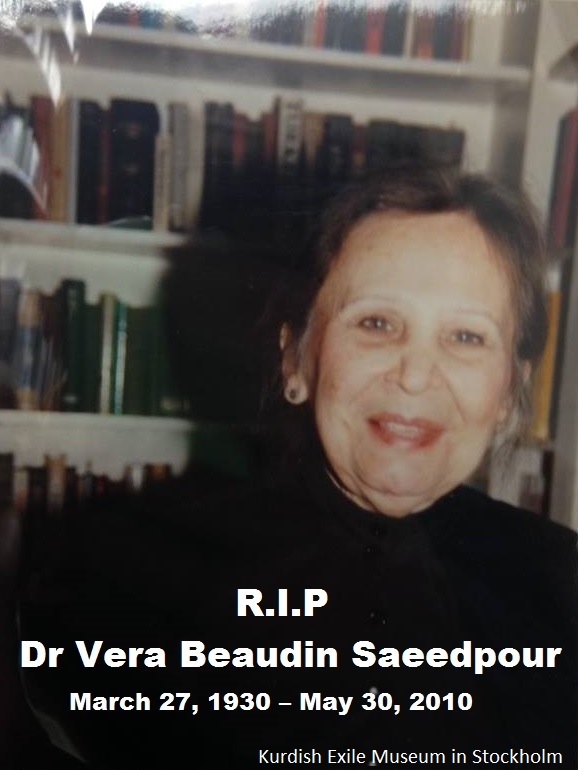
Dr. Vera Beaudin Saeedpour, born Vera Marion Fine on March 27, 1930, in Barre, Vermont, USA, passed away on May 30, 2010, in Schenectady, New York, at the age of 80. During her lifetime, she was a prominent scholar and activist who founded the first Kurdish library and museum in the United States, as well as initiated the first Kurdish cultural program at Harvard University. Her work has had a lasting impact on the preservation and promotion of Kurdish culture and history.
|
THE KURDS' WAY
Prospect Heights museum features ornate jewelry & costumes of little-known Asian people (1991)
 |
 |
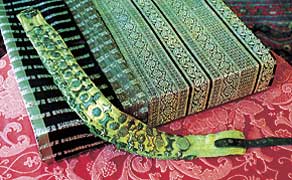
Kurdish culture: Dr. Vera Beaudin Saeedpour, founder and director of the Kurdish Museum in Prospect Heights, is currently exhibiting "Silver Sounds," an exhibit of Kurdish jewelry and costume. A belt from Turkish Kurdistan, circa 1900, is pictured at left. The Brooklyn Papers / Greg Mango |
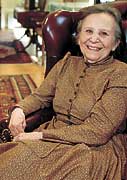
By Lisa J. Curtis The colorful world of Kurdish culture is on display now in an unlikely location - a brownstone in Prospect Heights. This museum on Underhill Avenue is North America's only center for Kurdish studies. Every day, the founder and director of the Kurdish Library and Museum, Dr. Vera Beaudin Saeedpour, considers herself "on call for the Kurds," zealously educating the world about Kurdish history and current events. For those of you unaware of the Kurds, an agrarian people from the region of Kurdistan - which after World War I, was swallowed up by Iran, Iraq, Syria and Turkey - "Silver Sounds: An Exhibit of Kurdish Village Jewelry," is an enticing introduction to the Kurds' breathtaking craftsmanship and culture. Called "folklori Kurdi," the collection of 30 pieces of silver jewelry is on display now through April 30th. It includes necklaces, headpieces, arm and leg bracelets, belts and amulets made with silver coins, religious symbols and amulets and paste glass. "Silver Sounds," curated by Saeedpour, displays the Kurdish Museum's collection of village jewelry from the late-19th and early 20th centuries. It was collected piece by piece from donors from different regions of Kurdistan and from Kurds in exile in other countries of the Middle East, such as Egypt and Jordan where some Kurds have lived since the Crusades, when Saladin, defender of Islam, defeated Richard the Lionheart, explained Saeedpour. "He's my favorite Kurd," she said with a smile. Past Kurdish Museum exhibits have included "The Legacy of Saladin," about the Kurd's most famous ancestor and in the mid-1980s, Saeedpour launched a photography exhibit, "The Kurds: An Endangered People" which toured the United States for two years. Both the Kurdish Museum and the Kurdish Library were born in Prospect Heights. The library opened on Underhill Avenue in 1986 and the museum, which opened two years later, occupies the same premises - a corner brownstone. Saeedpour struggles against the American propensity to reduce cultural appreciation to "15 minutes a year on a stage," instead encouraging diversity and education about Kurds through her quarterly, scholarly publications, the "International Journal of Kurdish Studies," now in its 15th year, and the journal "Kurdish Life." The journals cover everything from Kurdish folktales and proverbs to highly charged coverage of current events. The current exhibition of Kurdish jewelry, textiles and clothing is showcased in a warm, Kurd-style setting, rather than the antiseptic, institutional white-room treatment of larger museums. For her, the exhibition is "a relief from the horrible politics," said Saeedpour. "This [jewelry] collection has been amassed over the last 20 years - piece by piece. And every single one has a story. It's magical, and I can tell people the stories," said Saeedpour, enthusiastically eschewing the standard practice of pinning lengthy written summaries onto the walls next to the pieces. Saeedpour combines equal parts romanticism, skepticism, intelligence and humor in her energetic tour of the exhibit, all the while educating visitors about Kurdish history, culture and current events. The outspoken Saeedpour, a septuagenarian, who identifies herself as a Jew, a native Vermonter, a farmer and the widow of a Kurd, began her quest to build a center for Kurdish studies in 1981 after her second husband, died at age 33. His turban is on display in one of the costume cases. Saeedpour, who is not Kurdish, shared her moving stories about the racism he, a Kurd from Iran without any political agenda, was subjected to, from the accidental - like coming across a disparaging Oxford dictionary definition that referred to Kurds as "tall, pastoral and predatory" ("that Oxford should call a whole people 'predatory'!") - to the life-threatening. Her husband was struggling with leukemia in 1981, explained Saeedpour, and though it was during the Iranian hostage crisis, she was able to get some of his family members out of Iran to the Seattle hospital in which he was being treated, for a bone marrow transplant. The doctor, she said, mistaking her Kurdish husband for a Persian, refused to perform the procedure, saying he had a friend who was a hostage. Saeedpour saw the need for education when this doctor, whom she considered as representative of American academia, was unaware of the existence of Kurds and their plight. (The Kurds at that time were still without their own country and were suffering grave human rights abuses in Turkey.) "How terrible it was for my husband, who was not involved in politics at all, to still have his life at stake," said Saeedpour, adding, "The double insult was that he was being punished out of ignorance." Saeedpour was galvanized and angry. "Both institutions [the Kurdish Museum and Library] grew out of the Kurdish Program, which was established in 1981," after her husband's death, "to call attention to the fact that the fourth largest ethnic group in the Middle East was a veritable enigma to Americans," explained Saeedpour. "There are implications," said Saeedpour of the doctor's attitude toward her dying husband, "and consequences of this obscurity." In May, the Kurdish Program celebrates its 20th anniversary, a tribute to Saeedpour's perseverance and a monumental memorial to her husband. Saeedpour's tour of the jewelry exhibit is peppered with solemn stories like those of her husband's experience in America and also with humorous tales. And of course, the exhibit is also an assemblage of stories of friendship - people who appreciated the work "Dr. Vera" was doing on behalf of Kurdish culture and therefore donated these works of art to her library. Visitors may hear a story about the library's kilim rug, or the costumes, or the crown from the early 20th century or the crown skullcap of Persian coins, or the musical instruments. The jewelry is displayed in a long furnished room, among the oriental rugs, Western desk and dark leather chairs. The windows are fitted with ornately carved screens. The bookcases are edged with velvet drapes. The room doubles as a comfortable place for visiting scholars to study - or to take tea. "It's a good atmosphere to learn," she said. A large framed photo of a Kurdish woman nursing her child, snapped by Danish anthropologist Henny Harold Hansen, an author of a book on Kurdish women and a former Kurdish Museum board member, greets visitors when they enter the exhibit. (Saeedpour marvels that the subject in the photo wears her literally golden threads - a gold lame jacket - while casually sitting on a doorstep.) This photo realistically demonstrates how Kurds wore their clothes in the 1950s, as opposed to the exhibition's immobile mannequins. In a display case, a man's white suit - baggy pants, matching jacket, fringed turban and vest - is made of hand-loomed goats' hair, explains Saeedpour. An example of a cuff used to secure the hem of the Kurdish men's trousers is displayed in a neighboring case. The drawstring pants are layered over with a white cummerbund. "It's not just for fashion's sake," said Saeedpour, but "to keep their back straight while walking and riding horses" through the mountainous region. "You don't see a Kurd slumped over or with bad posture," said Saeedpour. ("Cummerbund" comes from the Hindi "kamarband" from the Persian "kamar" for "waist.") "You won't see [the Kurdish clothing] I saw in 1992," laments Saeedpour of the effects of encroaching Western culture in Iraqi Kurdistan today. "That's the real terrible part. Soon they'll be wearing jeans." The current exhibit is sponsored, in part, by the Greater New York Development Fund of the city Department of Cultural Affairs, and administered by the Brooklyn Arts Council. For Saeedpour, it's a welcome investment by the borough in her formidable mission to educate the world, as her fundraising must be squeezed in between maintenance of the library and research. "Now I prefer to run the place and do the journal and monitor the issue and be more objective," said Saeedpour, having hung up her lobbyist shoes. "My goal is to not be a total partisan. You don't get the truth that way." With her short hair, ready smile and flashing blue eyes, this petite septuagenarian has more energy and enthusiasm for education and discourse, than curators a half or a third of her age. And all of this for a cause she adopted later in life, a third career, after architecture and motherhood. Dressed in a Laura Ingalls-style pioneer dress, she peppers her talk with lively anecdotes and surprising personal comments - claiming an affinity for the Kurds "because they smoke, too." Saeedpour said there are a few items on display which she purchased during her 1992 visit to Iraqi Kurdistan, but that for the most part, "For these last 20 years, Kurds have sought me out," to make donations. "They found me."
"Silver Sounds: An Exhibit of Kurdish Village Jewelry" is on display now through April 30. The Kurdish Museum and Library is located at 144 Underhill Ave. The exhibit is open Sunday through Friday, 1 to 5 pm. For more information, call (718) 783-7930. Free. |
April 16, 2001 Issue | View the rest of the issue

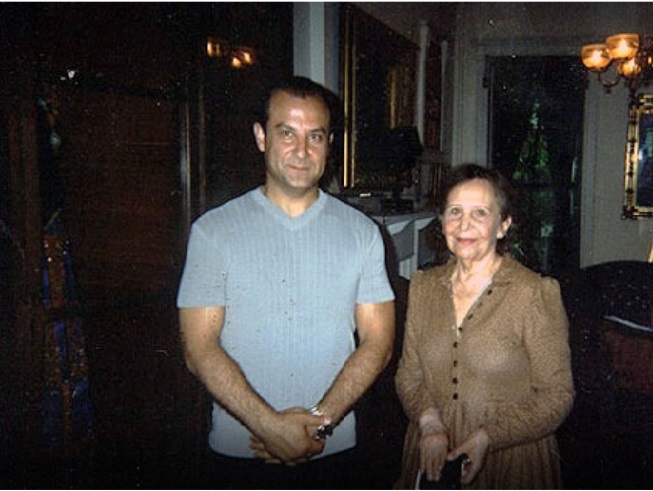
R.I.P Dr Vera Bauddin Saedpour, 2001, Brooklyn Newyork
Visiting The Kurdish Library and Museum in New York
_________________________
DR. VERA'NIN KÜRD HALKI İÇİN KURDUĞU KÜTÜPHANE NEDEN SAHİPSİZ KALDI?-- Yahudi asıllı bir amerikalı kürd dostu kadının kürd kültürüne adadığı ömür ve ardından gelen büyük boşlukDr. Vera'nın 1987'de kurduğu KURDISH LIBRARY IN NEW YORK, kürdlerin sıfır düzeyindeki ilgisizliği yüzünden Amerikan türk konsolosluğu'nun eline geçti! Dr. Vera Saedpour (http://en.wikipedia.org/wiki/Vera_Beaudin_Saeedpour) yahudi asıllı bir Amerikalıydı. Üniversitede öğrenciyken, Doğu Kürdistan'dan merdûx aşiretinin önde gelen ailelerinden birinin oğluyla okuduğu okulda tanışıyor ve birbirlerine aşık olup evleniyorlar. Bir kız çocukları oluyor ve yıllar sonra kocası, kürd aşiret prensi, ne yazık ki tedavisi imkansız elim bir hastalığa yakalanıp vefat ediyor. Library of Congress'e, Harvard Üniversitesi Widener Kütüphanesi'ne, Birleşmiş Milletler Dag Hammarskjöld Kütüphanesi'ne, yani dünyanın en büyük edebiyat merkezlerine, onlarca yıl boyunca kürd dili ve edebiyatıyla ilgili eserler gönderdiğim için, 2001 yılında buraları ziyaret ettim. Adını o zamana kadar sıkça duyduğum Dr. Vera'nın kurduğu New York Kürd Kütüphanesi'ni de ziyarete gittim elbette. Dr. Vera beni ve eşimi kapıda karşıladı. Duvar sarmaşıklarının kapladığı, Dr. Vera'nın özel mülkü olan üç katlı, dar cepheli kütüphane binasının dış kapısını açtığında karşılaştığım sevimli tebessümü hiç unutmam. Bizi içeri aldı ve ben hemen bütün salon boyunca yan yana dizili bulunan, kürdi tarihî eserlerin sergilendiği vitrinlere refleks olarak eğildim. O zaman bana: — Gel, önce bir kahve iç; ondan sonra onlara bakarsın, dedi. Kahve faslı sırasında yaptığımız kısa sohbette, kütüphanesine hediye olarak götürdüğüm İsveç Orrefors kristalinden yontulmuş küçük bir kristal baykuşu ona verdim. O da onu hemen salonun baş köşesine yerleştirdi. Daha sonra dikkatimi çok çeken tunçtan bir kartal heykelinin kime ait olduğunu sordum: — Bunu bize bir zaza kürdü yolladı. Salahaddin Eyyubi'nin sarayında bir süs eşyasıymış, dedi. Gözlerimi bu şahane olduğu kadar eski olan kartaldan ayırmadan birkaç fotoğrafını çektim. Kürdçe matbuat arşivinin yanı sıra, kürdler ve Kürdistan ile ilgili tarihî eserleri de toplamıştı. Uzun yıllar uğraşarak tam ve mükemmel bir müze ve kütüphane meydana getirmişti. Oldukça yoğun bir kişiliğe sahipti. Entelektüel ve oldukça fasih bir İngilizce konuşuyordu. KURDISH TIMES, KURDISH JOURNAL ve KURDISH NEWSLETTER adlı, her sayısı yüzlerce sayfayı bulan tam üç dergi çıkarıyordu. Birçok kültürel ve siyasi konuda sohbet ettik. Siyaset konusunda hiç unutmadığım şu sözleri bana söyledi: — Hiçbir halkın tarihinde görülmemiş bir şekilde, kendi lideri Xapo için kendini diri diri yakan insanlar oldu. Ama Xapo yakalandığında söylediği tek şey şu oldu: “Aman beni incitmeyin!” Oysa en azından şunu demeliydi: “Ben şuna üzülüyorum ki siz beni asarsanız dokuz canımın daha olmadığına üzülüyorum. Çünkü kürd halkı için bir can feda etmek çok azdır!” Sonra ona neden bu kütüphaneyi kurduğunu sordum. Kocasından TARÎKH-Î MERDUKH (Merdûx Kürdlerinin Tarihi) adlı bir kitabın miras kaldığını ve bu kitabın yanına binlerce kürdçe kitap getireceğine dair kendisine söz verdiğini söyledi. Kürdçe atasözlerine bayıldığını ve onları çok sevdiğini anlattı. Kürdçe atasözlerinin felsefi ve metodik rehberliğinin eşsiz derecede kıymetli olduğunu belirtti. Hatta “seviyorum” kelimesini özellikle vurgulayarak şöyle dedi: — I LLLLLLLLLOOOOVE Kurdish proverbs! Zaten Kurdish Journal dergisinin bir sayısını, sadece kürd atasözlerini içeren tematik bir sayı olarak “Kurdish proverbs” başlığıyla yayımlamıştı. Sonra ona kürdçe bilip bilmediğini sorduğumda bana: — Gû bixwe! yani “ağzına bok sür!” diye, kürdler kızdıklarında birbirlerine söyledikleri bu deyimi kürdçe telaffuz etti. Buna çok ama çok güldüm. — Celal Talabani aynı soruyu sorunca o da benden aynı cevabı aldı, dedi: Gû bixwe! Başka ilginç konuları konuşurken, kürdlerin kendi kültürlerine yeterince sahip çıkmamaları konusuna da yakınarak değindi. Kütüphanenin salonunda bulunan çok büyük bir piyanoyu göstererek şunu dedi: — Sen imtihanını başarıyla verdin Goran. Seni içeri alırken gördüm. Kürd müzesine girdiğinde dikkatini bu piyano değil, tarihî eserler çekti. Bazı kürdler, bir de kendilerine aydın diyorlar, kürd müze ve kütüphanesine geliyorlar ama kürd eserleri yerine bu piyano dikkatlerini daha çok çekiyor! “Piyano çalıyor musun?” diye soruyorum. “Yooo” diyorlar. Gerçekten de çok tuhaf bir şey. Sonra devam etti: — Buraya gelen ve kütüphaneyi beğenen kürdler bazen bana “Seni bir kürd restoranına davet etmek istiyoruz” diyorlar. New York'ta kürd restoranı mı var, nasıl olur da ben bunu kaçırmışım, diye soruyorum. “Evet vardır” diye cevap veriyorlar. Hayretler içinde kalıyorum. Bu kadar yıl New York'ta yaşamışım ve kürdlerle bu kadar ilişkim olmuş ama yine de kaçırmışım meğer. Bir defa bu daveti kabul ettim ve sonra çok şaşırdım. Çok iyi bildiğim bir semte gidiyoruz. “Restoran burada mı?” diye soruyorum. “Evet” cevabını alıyorum, türk yemekleri servis eden bir restorana giriyoruz. “Burası mı kürd restoranı?” diye soruyorum. “Evet burası” diyorlar. “Ama kapının üstünde 'türk yemekleri' yazıyor” diyorum. “O öyle ama yemekleri yapan kürddür” diye cevap veriyorlar! Türk yemeklerinden söz ederken Dr. Vera şunu da dedi: — Ben işgalci-ırkçı türkleri hiç sevmem; barbar yaratıklardır. Kürdlerle ilgilenmeden önce de bazı yazılarımda buna değinmiş, türkleri eleştirmiştim. Ama ben bu kütüphaneyi açar açmaz türkler bana çok büyük ilgi göstermeye başladılar. Jet sosyetedeki etkinlikler için sürekli özel davetiyeler geliyor. Araştırıyorum, davetiyeleri gönderenlerin kim olduğunu öğrenmek istiyorum; bakıyorum ki türk konsolosluğu! Hatta bazen telefon açıp beni türk kültürel etkinliklerine davet ediyorlar. Her seferinde reddediyorum. Stockholm'e döner dönmez Dr. Vera'ya kürdçe kitap kolileri hazırlayıp göndermeye başladım. Yedi sekiz yıl boyunca devam ettim. Yüzlerce kilo kürdçe ve diğer dillerde yazılmış, kürdler ve Kürdistan ile ilgili kitaplar, dergiler, broşürler, resimler ve çeşitli materyaller gönderdim. Bir ara hastalandım; buna rağmen seyrek de olsa göndermeye devam ettim. Sonra Dr. Vera'nın vefat ettiği haberi geldi. Çok üzüldüm. Hiç aklımdan çıkmadı ve hala çıkmıyor. Dr. Vera'yı ve onun mazlum kürd halkına yaptığı büyük yardımları hiç unutmayacağım. Daha sonra kızına e-posta yazdım. Başsağlığı dileklerimden sonra kütüphaneye ne olduğunu ve bundan sonra ne olacağını sordum. Eğer kütüphane sürdürülemeyecekse, bütün eserleri Stockholm'deki kendi kütüphaneme nakledebileceğimi önerdim. O da bana bir kadının adını verdi ve kütüphanenin artık bu bayan tarafından yönetildiğini yazdı. O bayana yazdım. Soyadı türkçe idi. Ama ben ingilizce yazmaya devam ettim. Kütüphaneye materyal göndermeyi sürdürmemi istedi. Ben de kabul ettim. Daha sonra bir vesileyle kocasının nereli olduğunu sordum. Bana: — Ben ve kocam TÜRK'üz! Dedi. Kadın “türk” kelimesini özellikle vurgulayarak cevap verdi. Bunun üzerine ona şunu söyledim: — Bu kütüphane, işgalci türklerin baskı ve sömürüsü altındaki kürd halkı için çok önemlidir. Siz kürdçe bilmediğiniz halde kütüphanenin muhtevasını nasıl değerlendirebilirsiniz? — Sorun değil, burada kürd arkadaşlar var; sağ olsunlar yardım ediyorlar, dedi. Daha sonra Amerika'da Harvard Üniversitesi'nde profesörlük yapan, tam on üç dil bilen ve uzun yıllar birlikte çalıştığımız Hindistanlı bir dostuma bu durumu anlattım. — Evet, ne yazık ki öyle. Aldığım bilgiye göre bu kadın Amerikan türk konsolosluğu'nun elemanıdır, dedi. O da bu duruma üzüldü. Sözde bir kürd hükümetimiz var. Amerika'da kürd temsilciliklerinden geçilmiyor. Dr. Vera'nın büyük bir özenle kurduğu ve resmî bir statüsü olan bu kütüphanenin geliştirilmesine gerek duyulmasa bile, en azından kürdlerin elinde kalması gerekirdi. Ama kürd liderleri hain olduklarından bu kütüphaneye BİLEREK sahip çıkmadılar. |
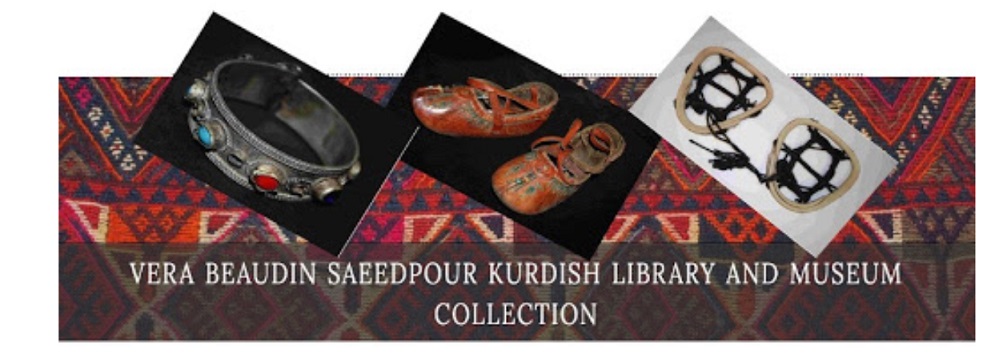
Friends of Kurds and Kurdish language lovers have been instrumental in bolstering and preserving Kurdish resources and arguing for the necessity of basic human rights for Kurds. Scholar and archivist of Kurdish culture, Vera Beaudin Saeedpour (1930-2010), was one such individual who started the Kurdish Heritage Foundation, Kurdish Library, and Kurdish Museum in Brooklyn, New York, in the early 1980s. She also published two important Kurdish journals: The International Journal of Kurdish Studies and Kurdish Life. Vera Saeedpour’s invaluable treasure trove of materials and artifacts can now be found at the Binghamton University Libraries. The Vera Saeedpour Kurdish Library and Collection consists of 3,000 books, journals, and newspapers in Kurdish and many other languages. More details about the written materials in their collection can be found via their finding aid. In addition, the collection contains some jewelry, headpieces, belts, musical instruments, and recorded music, as well as textiles, of which images can be viewed on their website, along with descriptions. If you have a chance to visit upstate New York (fall, in particular, is recommended), please visit the Kurdish collection display at Bartle Library at Binghamton University (SUNY).